
Solar Vegetation Management & Agrivoltaics Services – Texas & Nationwide
Complete Sheep Grazing Programs
We partner with professional graziers and agricultural specialists to manage every part of your agrivoltaics setup. Our programs are tailored to the size, terrain, and needs of your solar farm.
Program Features
- Regular grazing rotations that maintain ideal vegetation height
- Fencing and access management
- Monitoring of flock behavior and site conditions
- Coordination with site operators and construction teams
- Seasonal adjustments based on weather and growth patterns
- Full reporting and communication during each grazing cycle
Programs can be set up as seasonal contracts, multi year agreements, or long term land management partnerships.
How Sheep Improve Solar Farm Performance
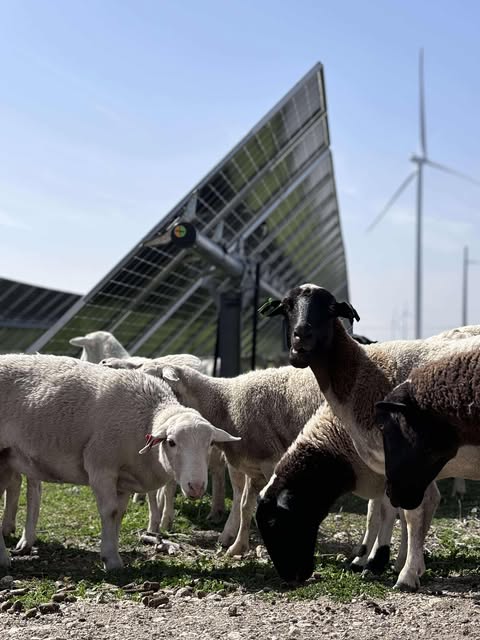
Gentle on Solar Infrastructure
Consistent and Even Vegetation Height
Ideal for Hard to Reach Areas
Sheep naturally graze:
- Narrow corridors between arrays
- Shaded areas where vegetation grows quickly
- Perimeter zones
- Areas unsuitable for machinery during wet or soft soil conditions
Their ability to move freely gives solar operators reliable, year round coverage in places where equipment cannot safely reach.
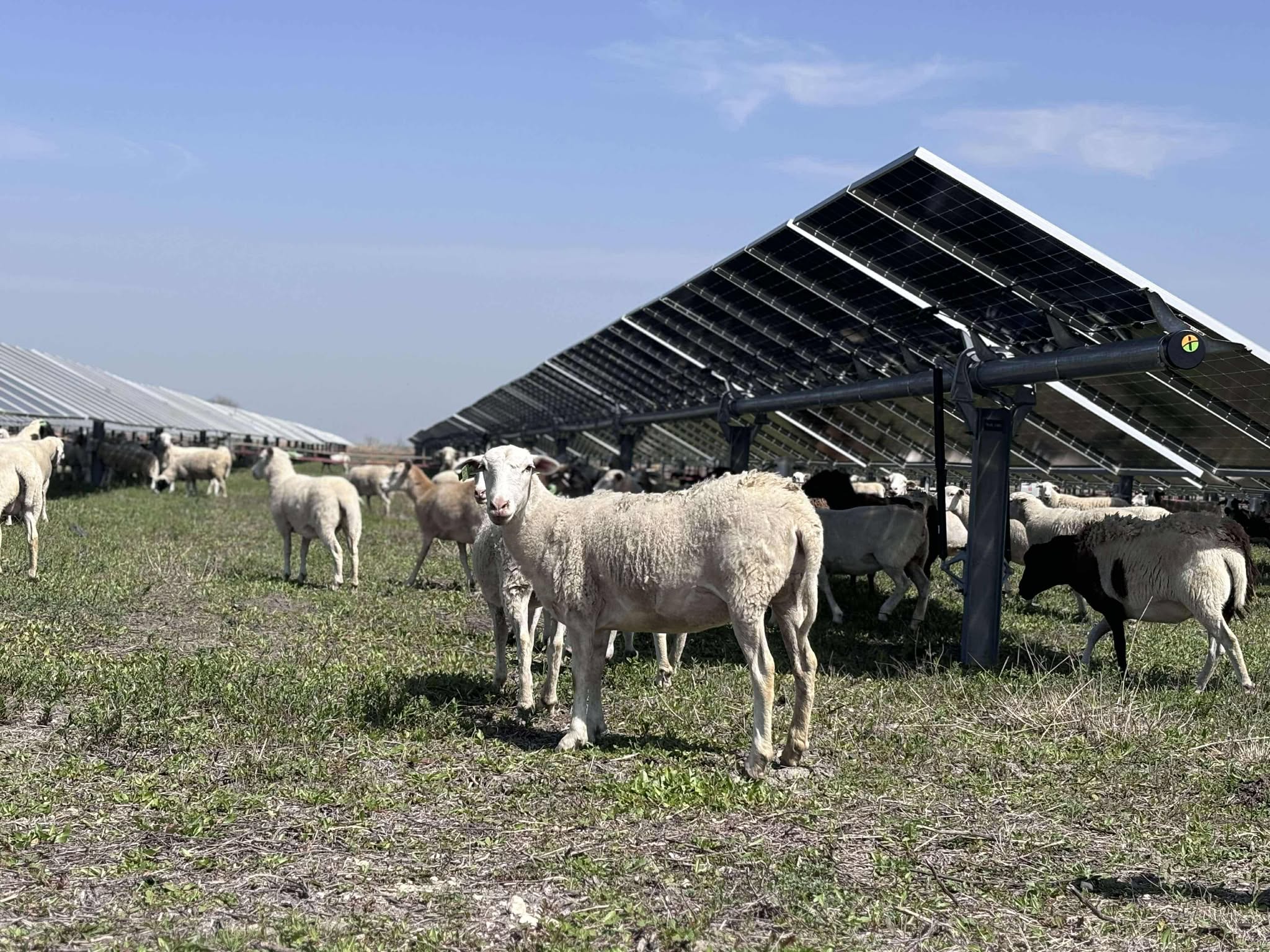
Supports Soil and Site Health
Reduces Long Term Costs
Case Study
Hybrid Vegetation Management for a Texas Utility-Scale Solar Portfolio
Overview
Read More
Portfolio Scale:
- 2 GW of solar capacity serviced
- 5 million solar panels traversed
- < 20 panels damaged (< 0.0004 percent)
- 100 percent of grazing and mowing self–performed by KerTec (no subcontractors)
Operating Context
Objectives:
- Maintain vegetation at or below 18 inches in arrays
- Keep pads, combiner boxes, roads, and infrastructure clear
- Reduce erosion and stabilize soils post–construction
- Provide defensible, geo–referenced documentation for audits and O&M teams
KerTec’s Hybrid Solution
1. Managed Grazing
Adaptive stocking strategies aligned with forage availability and seasonal surges. KerTec–owned and managed herds, transport, shepherding, and animal care, supported by surge and drought contingencies.
2. Custom Array–Safe Mowing
3. Targeted Chemistries + Precision Drone Spraying
4. Soil & Vegetation Science
Results
- Vegetation thresholds maintained across arrays and infrastructure zones.
- Mowing frequency reduced by 20–40 percent.
- Hand trimming and zero turn hours reduced from 3,000 to 1,000 hours (66.7 percent reduction).
- Non desirable species controlled to > 90 percent.
- Fewer than 20 panel incidents across 5 million panels serviced (< 0.0004 percent).
- All compliance audits passed with zero corrective actions.
Lessons Learned
Hybrid vegetation models combining grazing, custom equipment, and targeted chemistry significantly improve consistency and reduce operational strain. Drone based applications increase precision while reducing total chemical load. GIS and disciplined documentation processes create seamless audits and defensible decision trails.
Case Study
Midwest Agrivoltaics Program - Grazing Expansion
Executive Summary
KerTec completed comprehensive planning for a Midwest agrivoltaics program that will integrate managed grazing, array safe custom mowing equipment, and targeted chemistries with drone spraying in arrays. The grazing plan was developed to meet vegetation height thresholds and satisfy siting board expectations, including those of the Ohio Power Siting Board (OPSB).
While the grazing plan was under development, KerTec successfully executed a mechanical and chemical vegetation management campaign that complied with all the same agency permit requirements and regulatory conditions.
Read More
Volume of Work:
KerTec has serviced over 2 GW of solar capacity across the United States (> 5 million panels traversed) with fewer than 20 panels damaged (< 0.0004 percent) across its total portfolio to date.
All mowing and chemical vegetation management operations including transportation, equipment deployment, and chemical application were performed entirely in house by KerTec, with no subcontracting.
Regulatory Context and Agency Engagement
OPSB requirements included vegetation height control in arrays, documented clearance around equipment, stabilization and erosion control aligned with permit and stormwater commitments, and audit ready monthly reporting with geo referenced observations, corrective actions, and performance triggers. KerTec engaged actively with land teams and aligned vegetation plans with siting board conditions. Reporting practices included UAV imagery, fixed point height sampling, and chemistry logs suitable for regulatory review.
Methodology
Mechanical Vegetation Management
Targeted Chemistries and Drone Spraying
Compliance Alignment
Future Grazing Implementation
Results
- Vegetation height thresholds were maintained across arrays and infrastructure corridors during surge periods.
- Mowing frequency reduced by 20–40 percent.
- Overall man hours reduced by 66.7 percent, lowering hand trimming and zero turn effort from 3,000 to 1,000 hours.
- Non desirable species controlled to > 90 percent.
- Serviced > 5 million panels across 2 GW of solar sites nationwide with fewer than 20 panels damaged (< 0.0004 percent).
- OPSB compliance audits completed with no corrective action requests.
Lessons Learned
Agrivoltaics for Solar Farms Nationwide
Advantages Across Different Climates and Regions
Effective in warm season growth zones
Reliable in cooler climates
Improves soil stability in drought or flood prone regions
Less equipment strain during extreme conditions
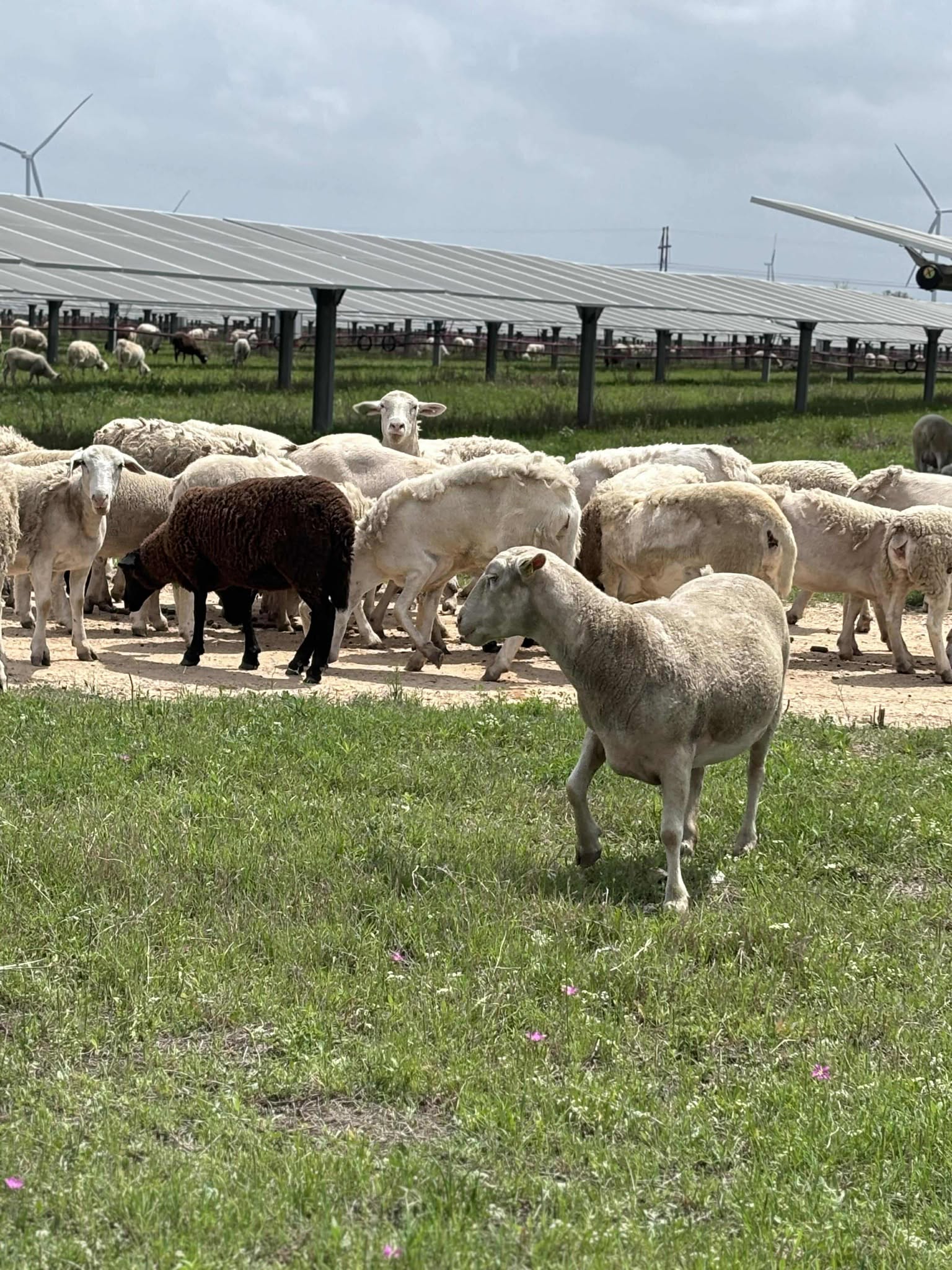
Compatible with rural, agricultural, and multi use land
Agrivoltaics helps landowners maintain agricultural classifications in many jurisdictions, supports local farmers, and maximizes both energy and land productivity.
Sheep grazing integrates seamlessly with utility scale, commercial, and agricultural solar developments across the United States and adapts to regional needs without sacrificing performance.
How Agrivoltaics Supports Landowners
For private landowners hosting a solar array, sheep grazing provides additional benefits:
- Retains agricultural land use designations in many jurisdictions
- Generates secondary income streams
- Supports local farms and graziers
- Improves long term land health
Agrivoltaics helps landowners keep land productive rather than letting it sit unused beneath solar panels.
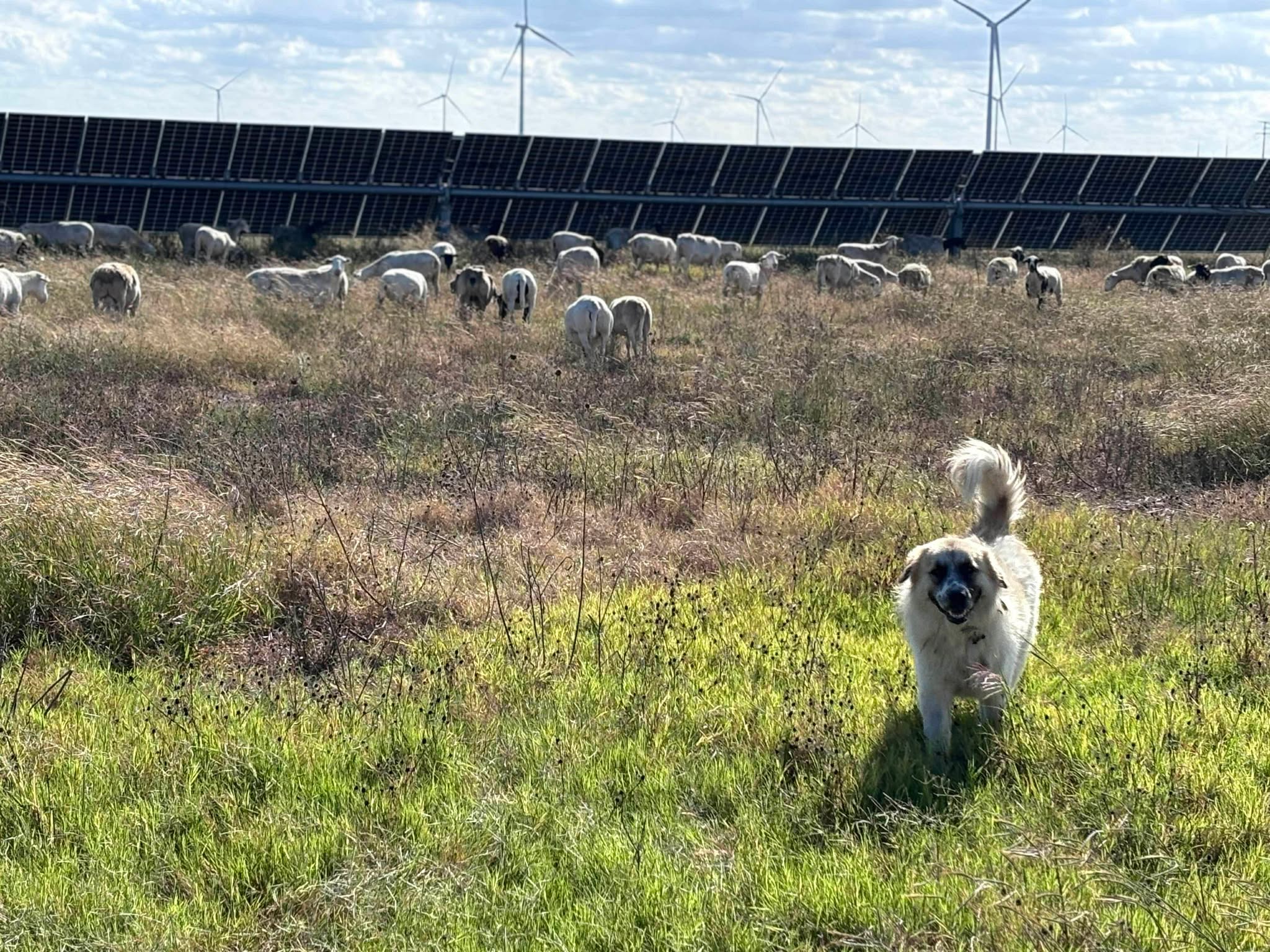
Safe, Reliable, and Scalable
We work only with trained graziers who understand the unique environment of solar farms. Safety for both animals and equipment is the top priority.
Our Focus Areas
- Proper flock size for each site
- Safe fencing and entry points
- Water access and shade
- Grazing rotation designed around infrastructure
- Transparent scheduling and reporting
Whether you manage a 20 acre site or a multi hundred acre solar development, we scale operations to match your needs.
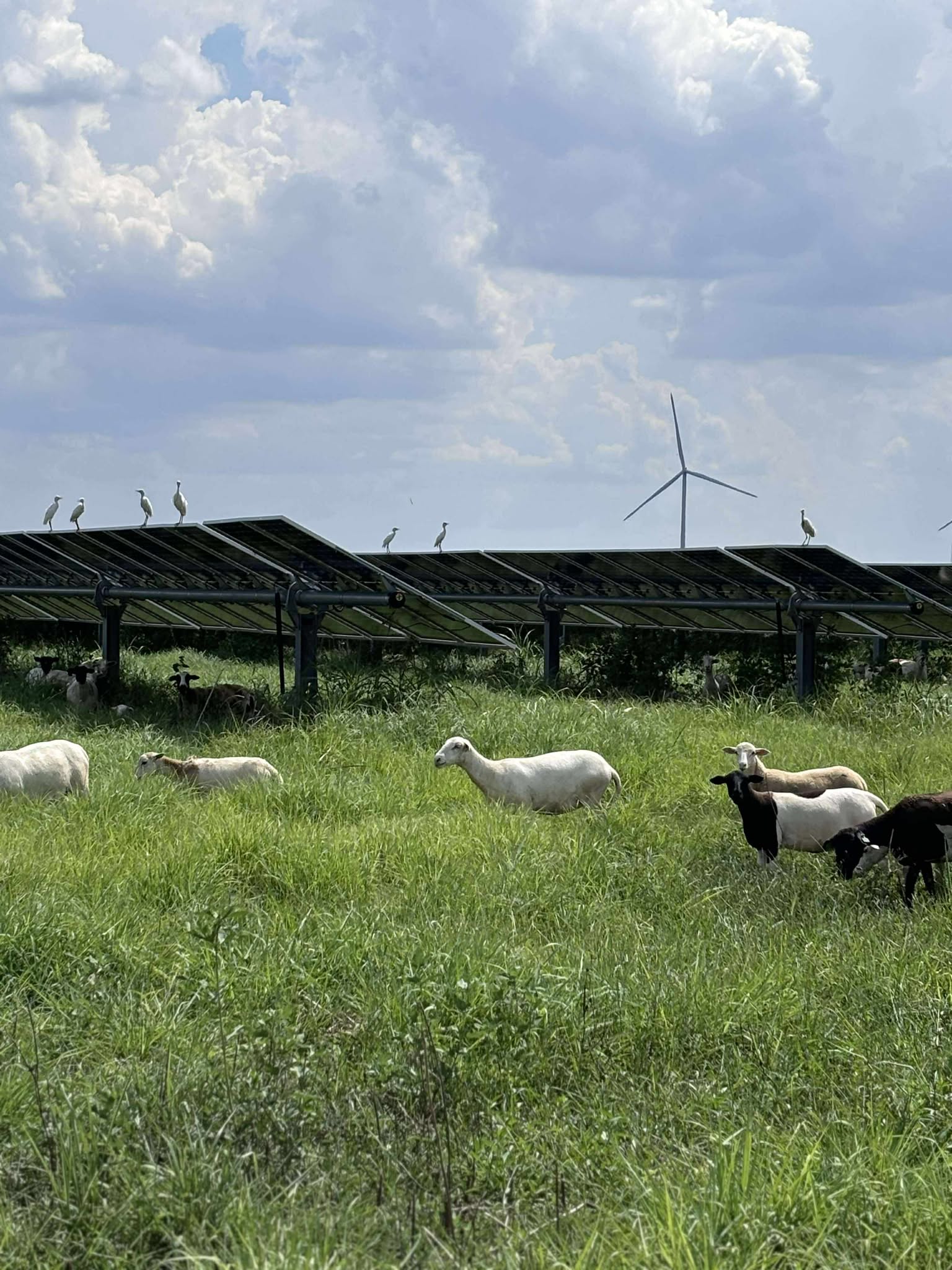
Start Your Agrivoltaics Program
Sheep grazing is one of the most practical and environmentally friendly solutions for long term solar vegetation management. If you want to reduce maintenance costs, improve energy performance, and support sustainable land use, agrivoltaics is a proven option.
Contact us to schedule a site assessment or request a grazing proposal. We provide sheep agrivoltaics services throughout Texas and nationwide.
About KerTec LLC
KerTec LLC provides specialized vegetation management solutions for solar farms, utilities, and large commercial properties, with a strong focus on agrivoltaics and sustainable land management. By combining proven grazing practices with modern land care strategies, KerTec helps reduce fire risk, control invasive species, and maintain compliant, well-managed sites without relying solely on mechanical mowing or chemical treatments.
With deep experience in solar vegetation management, KerTec works closely with site owners and operators to create customized, cost-effective programs that support long-term performance and environmental stewardship. Their approach improves soil health, promotes native plant growth, and keeps properties safe, accessible, and visually maintained, making KerTec a trusted partner for large-scale vegetation management projects.
Frequently Asked Questions
Agrivoltaics is the practice of combining solar energy production with agricultural activities. When done correctly, both the land and the solar infrastructure benefit at the same time.
Sheep grazing is the most successful and widely used agrivoltaic method because sheep naturally maintain vegetation without damaging solar panels, wiring, or racking systems.
Sheep are the ideal livestock for solar vegetation management. They are small, agile, gentle on equipment, and effective at keeping grass and weeds under control.
- Natural vegetation control: Sheep graze consistently and evenly, preventing vegetation from growing tall enough to create shading losses.
- Lower maintenance costs: Grazing reduces or replaces mowing, equipment hours, and fuel expenses. Over time, this leads to significant savings for solar operators.
- No risk of equipment damage: Sheep do not climb, rub against, or interfere with solar infrastructure. Unlike goats or cattle, they safely navigate between panels without causing harm.
- Improved soil health: Grazing naturally aerates soil, distributes nutrients, and helps establish stronger root systems that reduce erosion.
- Eco friendly and community supported: Agrivoltaics reduces herbicide use, supports local agriculture, and creates positive environmental impact.
- Predictable results: Sheep maintain a consistent vegetation height, even in seasons with rapid growth.
The number of sheep depends on vegetation growth rates, acreage, and regional climate. Most solar farms require between 5 and 10 sheep per acre during active growing seasons. A grazing assessment determines the optimal stocking rate to maintain vegetation at safe levels.
No. Sheep are ideal for solar environments because they do not climb, jump onto structures, or chew wiring. They move gently around racking systems and avoid equipment naturally. This is why sheep are preferred over goats or cattle for agrivoltaic grazing.
Yes. By keeping vegetation consistently low, sheep remove the dry fuel sources that contribute to fire hazards. This is especially helpful in regions with hot, dry summers or drought conditions.
Rotation schedules vary by growth rate, rainfall, and vegetation density. In most cases, flocks are rotated every 2 to 6 weeks to maintain even coverage and prevent overgrazing. Managed grazing plans are created specifically for each site.
Absolutely. Many agrivoltaic programs partner with local shepherds and agricultural producers. This creates new revenue streams, supports rural economies, and strengthens agricultural communities.
Yes. Sheep grazing can be integrated into newly built solar farms or added to existing facilities. Infrastructure needs are minimal, and grazing plans are easily adapted to different site layouts and panel configurations.
Sheep graze a wide variety of grasses and broadleaf plants commonly found on solar sites. They prefer tender, fast-growing vegetation that often causes shading issues. Their natural grazing habits make them extremely effective at controlling growth.
Yes. Grazing reduces recurring mowing costs, lowers fuel consumption, minimizes equipment repairs, and decreases labor hours. Many operators experience significant long-term savings compared to mechanical vegetation control alone.